
Rail and tunnel monitoring
Movement monitoring of tunnels, rail structures and underground assets affected by nearby construction, surveyed and reported to the requirements of the asset owner's protection agreement.
Protecting underground assets
When construction happens near tunnels or rail structures, the asset owner needs evidence that its asset is not being damaged. Asset protection agreements with owners such as TfL, Network Rail and Thames Water typically set movement triggers, monitoring frequency and reporting formats, and the monitoring has to meet them.
Working to third-party requirements
Tunnel and rail monitoring is work where access is tightly controlled, accuracy matters and reports have to satisfy a third party. We plan installation and readings around the access windows the asset owner allows, and report in the format their engineers expect.
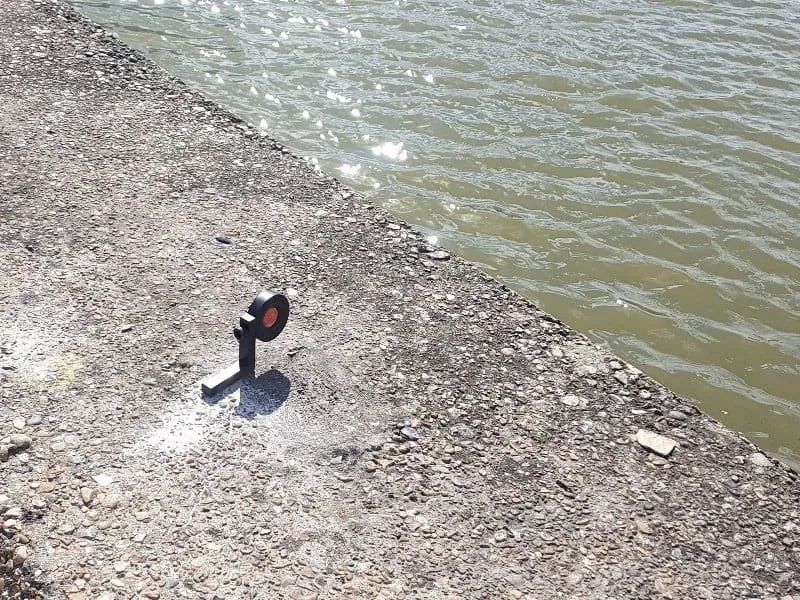
How asset protection monitoring runs
The asset owner’s engineers normally review and approve the monitoring proposal before any work starts. That proposal sets out the monitoring points, the instruments and their accuracy, reading frequency, trigger values and the action plan if one is breached. Installation and baseline readings then take place within the access windows the asset owner allows, which on operational railways often means nights or weekend possessions. Readings continue through the works, and the reports go to the asset owner in their required format, often weekly, with immediate notification of any trigger.
Methods
Depending on the asset and the agreement, we use prism monitoring with total stations, precise levelling for vertical movement and automated total stations where continuous data is required. Inside tunnels, mobile SLAM scanning can record the whole tunnel lining in a short possession, alongside the monitoring points.
How it works
Agree requirements
Work with the engineer and asset owner to define monitoring points, frequency, triggers and reporting.
Install and baseline
Install monitoring within the permitted access windows and establish a baseline before works.
Monitor and report
Readings and reports to the agreed schedule, with immediate escalation on triggers.
Who we work with
Developers and contractors
Monitoring required by an asset protection agreement next to your works.
Engineers
Data that satisfies third-party technical approval.
Asset owners
Independent records of how your asset responded to nearby works.
Where we work
From our base in Leigh-on-Sea, Essex, we carry out rail and tunnel monitoring across London, Essex, Kent, Hertfordshire and the rest of the UK. Local pages:
What clients say
Read all 90+ reviews on Google★★★★★
THS Concepts carried out movement monitoring for us during a large renovation in Leigh on Sea, needed as part of our party wall awards. Reliable readings throughout, kept us updated regularly and gave us real peace of mind during the works. Would recommend!
★★★★★
THS Concepts provided Echo Construction Group with regular movement monitoring surveys which have been off great use during our basement excavation works and recommend them!
★★★★★
Truly excellent Company and Staff. I tendered several Monitoring companies and THS Concepts communication via email was perfect. The Fees were reasonable and I was more than comfortable going ahead with them. …
Rail and tunnel monitoring: common questions
Why do works near tunnels need monitoring?
Excavation, piling and loading near tunnels can cause movement. Asset owners such as TfL, Network Rail and Thames Water usually set explicit movement limits in their agreements, and monitoring shows they are met.
Do you work within possessions and restricted access?
Yes. Installation and readings are planned around the access windows the asset owner allows. Where access is very limited, automated or mobile scanning methods help.
What monitoring methods do you use?
Prism monitoring with total stations, precise levelling and automated total stations, chosen to suit the asset and the agreement.
Guides
Related services
- 3D laser scanning
Point clouds and BIM models of buildings, plant and structures.
- Setting out
Gridlines, foundations, piles and roads set out on site.
Tell us about your site
Send a location, a rough brief and your deadline. We reply with a fixed quote within one working day.