
Need it done by a professional? THS Concepts carries out measured building surveys for architects, engineers and contractors.
If you are budgeting for a refurbishment, extension, commercial fit-out or as-built documentation drawings, a measured survey is often the first cost you will be asked to confirm. The tricky bit is that there is no single “set price”, because the scope can range from basic 2D drawings to a full 3D survey, point cloud and BIM Revit model.
This guide explains what a measured building survey is, what affects the price, and what you should expect to receive in your quotation.
Quick answer: for a typical UK residential property needing CAD and PDF as-built drawings (floor plans plus elevations and sections), many providers quote within the £800 to £2,000+ range, depending on scope and complexity. At THS Concepts, smaller residential projects often start from around £600 + VAT, with larger or more intricate buildings priced to specification. Most residential drawing packages are turned around within 3 to 5 working days from the site visit.
How much does a measured survey cost in 2026?
For a typical UK residential property needing CAD and PDF as-built drawings (floor plans plus elevations and sections), many providers quote within the £800 to £2,000+ range, depending on scope and complexity. At THS Concepts, smaller residential projects often start from around £600 + VAT, with larger or more intricate buildings priced to specification. Most residential drawing packages are turned around within 3 to 5 working days from the site visit.
Definition and purpose of measured surveys
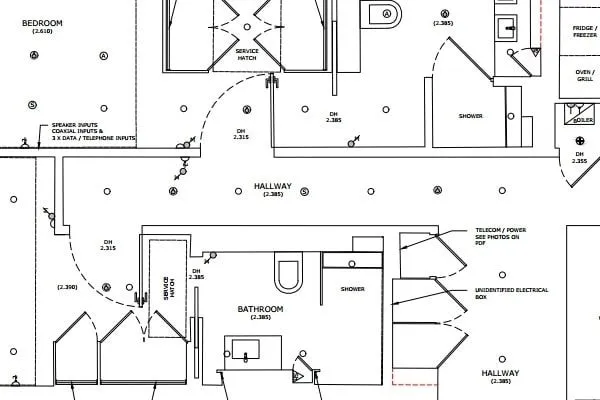
A measured survey (often called a measured building survey) is the process of capturing accurate property measurements so you can produce reliable as-built drawings. These typically include as-built CAD floor plans, elevations, and sections, showing the building’s geometrical characteristics and key structural elements. For a fuller explanation, see our guide on what a measured survey is.
You normally need one when:
- You have missing or unreliable existing drawings
- You are preparing designs for planning or construction projects
- An architect or structural engineer needs accurate base information
- You need consistent drawings for building regulations, tendering, or pricing
What a measured survey includes
Your measured survey deliverables depend on the specification, but a “standard measured survey” commonly includes:
- 2D drawings: floor plans, roof plan (if required), ceiling plans, elevations, sections
- As-built drawings supplied as CAD and PDF as-built drawings (DWG plus PDF)
- Site photos to support architectural features and layout notes
- Optional: point cloud (from laser scanners)
- Optional: 3D model or BIM Revit model for coordination and design
If required, surveys can also be related to a known coordinate system, such as the Ordnance Survey grid and datum, by establishing site control first.
Benefits and uses of measured surveys
A good measured survey saves time and reduces design risk because everyone works from the same trusted base.
Common uses include:
- Planning approval: accurate architectural drawings reduce back-and-forth and avoid mismatched dimensions
\ - Building regulations: clearer existing layouts help avoid surprises during compliance checks
\ - Space planning and interior design: reliable floor plans and ceiling plans make layouts faster and more confident
\ - Structural engineer work: accurate wall positions, openings, floor build-ups, and sections help structural design decisions
\ - Lease plans: measured data supports consistent plans for property documentation
\ - Commercial fit-outs and refurbishments: measured surveys of offices, retail units and mixed-use buildings help design teams plan accurately and avoid costly surprises on site.
\ - Heritage and listed buildings: accurate existing records are often required before restoration or alteration work on a protected structure, where non-contact laser scanning is particularly valuable.
\ - As-built documentation drawings: ideal for handover records, refurbishments, and future maintenance
\ - 3D model workflows: where a 3D survey or BIM model is needed for coordination, retrofit planning, or complex buildings
Types of measured surveys and related services
There is more than one way to capture a building, and the method affects cost, speed, and outputs.
1) Standard measured survey (manual)
Often completed using a disto laser measure and traditional methods, sometimes with a tape measured survey method for small areas. This can suit simple, low-risk layouts where speed is not the priority.
2) Digital measured site and building surveys (laser measurement)
Using laser scanners to capture dense measurement data quickly. This is usually the most efficient route for detailed measured survey outputs, complex shapes, and high detail requirements.
3) 3D laser scanning and point cloud deliverables
Ideal for refurbishment, heritage, MEP coordination, or buildings with tricky geometry. Outputs can include point cloud files and optional 3D model or BIM.
4) Related services that can be added
- Topographical surveys if you need external levels, boundaries, or site features
- Drone survey for roof areas or hard-to-access elevations
- Additional drawing packs like detailed building elevation survey sets, roof plans, or extra sections
Process and stages of a measured survey
Most projects follow the same core survey stages:
- Initial consultation and specification
We confirm exactly what you need: floor plans only, or full elevations and sections, level of detail, drawing scale, and whether you need CAD, PDF, point cloud, or a 3D model. - Site visit or home visit
A surveyor visit to capture the data. We may also photograph the layout to support drafting and quality checks. - Data capture
Depending on scope, this could be laser measurement with laser scanners, or a simpler approach for smaller areas. - Processing and drafting
Drawings are produced as 2D AutoCAD drawings (or equivalent), with careful checking against the captured data. Laser scanning workflows typically involve point cloud processing in specialist laser scanning software (often referred to as LSS software in the industry). - Quality checks and delivery
Final outputs are issued as DWG and PDF. If your quotation includes revisions, amendments are completed as agreed.
Factors influencing survey costs
Measured building survey cost is driven by time on site and time in the office. The biggest pricing factors are:
- Property size and overall floor area
- Number of floors and whether lofts, basements, or roof areas are included
- Building complexity: split levels, curved walls, irregular geometry, heavy architectural detailing
- Required detail: do you just need room shapes, or also features like structural elements, window schedules, services, ceiling detail, etc
- Accuracy requirement and acceptable accuracy error: tighter tolerances take longer to capture and verify
- Access arrangements and site access: occupancy, restricted rooms, keys, safety constraints
- Geographical location: travel time, and practical constraints like parking restrictions and congestion charges in some areas
- Party walls and tight boundaries: extra care may be needed around shared walls or where access is limited
- Control requirements: if you need the survey tied to a known system (for example OS grid and datum), a survey team may establish control using GNSS RTK receivers and a total station where appropriate
Typical measured survey costs (price ranges)
Here are sensible UK guide ranges you will see advertised, depending on scope and provider:
- Some packaged services advertise measured survey starts from around £250+, typically for limited scope.
- Many residential measured building surveys are commonly quoted around £800 to £2,000+, depending on deliverables and complexity.
- At THS Concepts, smaller residential properties often start from about £600 + VAT, with larger or more intricate buildings priced to specification.
Real examples (THS Concepts)
To make this more concrete, here are example fees previously charged for fairly standard measured building surveys captured with 3D laser scanning and delivered as CAD and PDF drawings, including amendments:
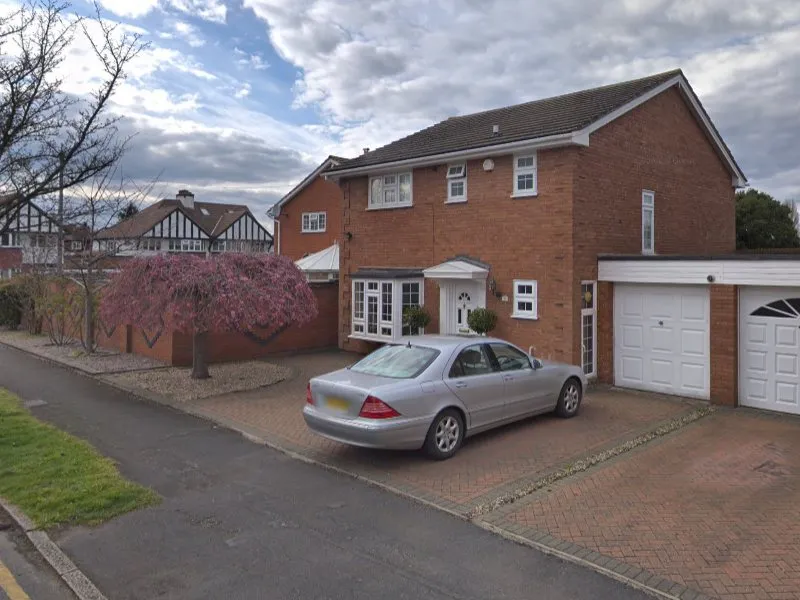
- 3 bedroom house (2 floor plans, 4 elevations): £1,750 + VAT
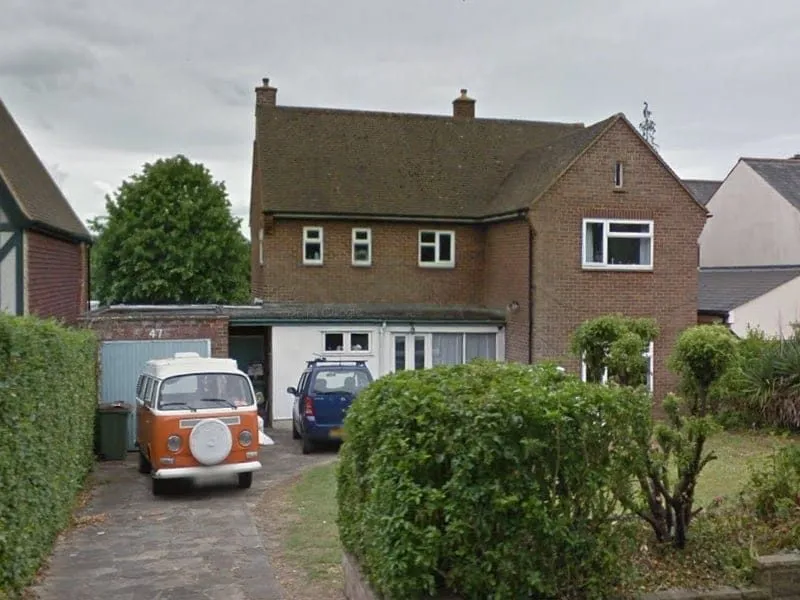
- 4 bedroom house (2 floor plans, 4 elevations, loft plan, 1 section): £2,100 + VAT
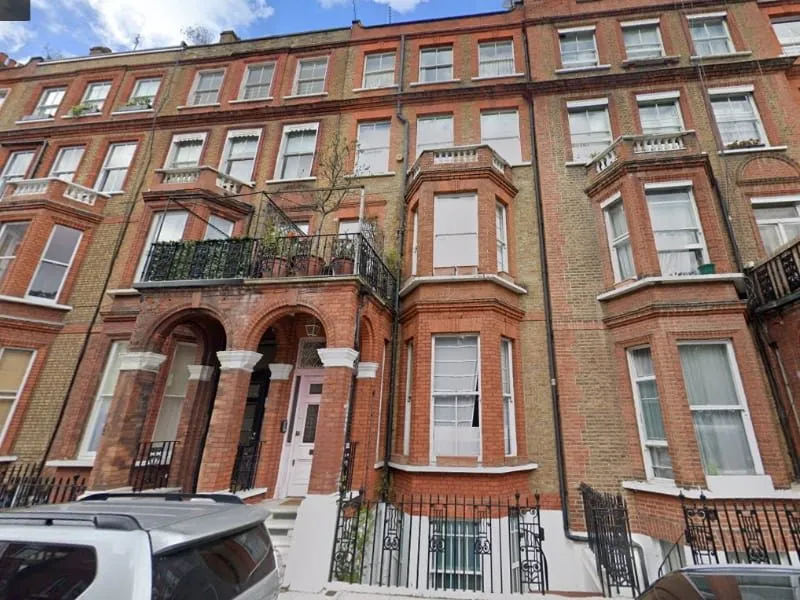
- 6 bedroom house (5 floor plans, 4 elevations, 2 sections, roof plan): £3,500 + VAT
3 Bedroom House
4 Bedroom House
6 Bedroom House
If your project falls within these ranges or you want a price for something larger or more complex, the best next step is to send us the address, the drawings you need and any timescales. We can usually confirm the right survey scope and issue a quotation quickly.
How to get the best price (without cutting corners)
If you want accurate drawings that actually help your architect, designer, or structural engineer, price alone is not the goal. Value comes from a clear scope and a clean deliverable.
Here is how to keep costs sensible:
- Send a clear spec: list the drawings you need (floor plans, external elevations, sections, ceiling plans, roof plan), file formats (DWG, PDF), and any must-have details
- Share existing drawings if you have them: even if they are unreliable, they help spot risks early
- Make access easy: unlock rooms, clear clutter in awkward spaces, and confirm parking or entry instructions
- Reduce the scope where appropriate: if you are only altering one area, you may not need the full building surveyed
- Check your quote wording: confirm what is included, what counts as a revision, and whether extra site visits are chargeable
- Ask for example CAD and PDF as-built drawings: quality and layer organisation matters a lot once design work starts. You can see examples of our measured survey drawings.
Why clients use THS Concepts for measured surveys
Established in 2013, THS Concepts has carried out measured building surveys for homeowners, architects, developers, contractors and consultants across London, Essex and further afield.
We are a member of The Survey Association, and our in-house team handles both on-site data capture and drawing production, which helps keep quality consistent from survey through to final issue. Drawings are typically delivered within 3 to 5 working days for residential projects.
We cover residential and commercial properties, from single-room alterations and house extensions through to listed buildings, multi-storey commercial buildings and heritage documentation, across Essex and London. If you have a project in mind, see our measured building survey services for more on what we offer, or contact us directly for a quotation.
Frequently asked questions (FAQs) about measured surveys
Need a Measured Survey For Your Property?
- Trusted since 2013, TSA Member
- Residential and commercial properties
- London, Essex and UK-wide
- Typical delivery 3 to 5 working days