
Need it done by a professional? THS Concepts carries out measured building surveys for architects, engineers and contractors.
If you are commissioning a measured survey for the first time, or checking whether a surveyor’s deliverables are suitable for your architect or designer, this page explains what each drawing type shows and when it is needed.
The examples below cover the most common outputs from a measured building survey. If you want to see actual drawing samples in DWG and PDF format, you can download an example pack from the link below each section, or view our full measured survey service to discuss your specific requirements.
Example Drawing Types
Floor Plan Drawing Examples
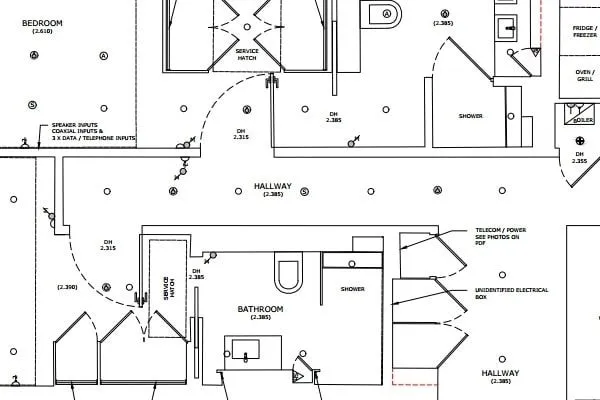
CAD Floor plan drawings are one of the most common drawing types in architecture and building engineering projects. A floor plan is a scaled drawing showing a view from above, which clearly defines the relationship of rooms and areas to each other.
Floor plans are important as they show elements of a building and where they are positioned. Elements include doors, windows, walls, stairs, overhead beams etc.
A floor plan is one of the first places a designer will start when coming up with their designs. They can help to understand the layout of a room and see whether furniture fits, and obtain accurate floor areas for contractor pricing.
A standard floor plan typically shows wall thicknesses, door and window positions with sill and head heights noted, stair layouts, built-in cupboards and fireplaces, sanitary fittings, floor and ceiling level annotations, and room names. For loft plans, it will also show the rafter or truss layout where accessible.
See example floor plan drawings
Section Drawing Examples
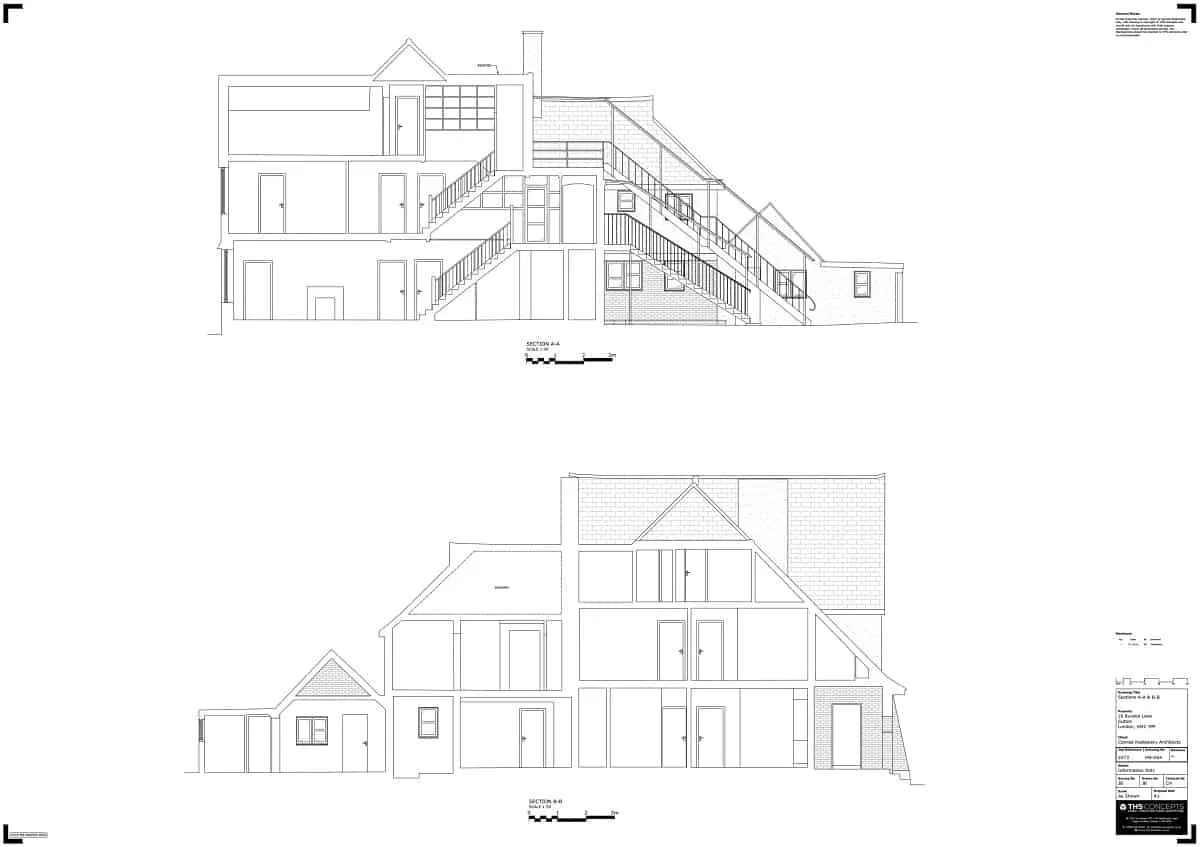
A section drawing shows a cut through a building as if it has been sliced with a knife and one part has been removed. A section through a building is very useful for a designer as they can clearly see the relationships of the spaces to each other, which may not be clear on a plan.
They are also useful for getting a clearer picture of heights within a building and can show important relationships between items such as ceiling and floor levels. The direction and location of the section lines are usually stated on the floor plan drawing and, if drawn correctly, will show the section as it is at that exact location.
A measured survey section will typically show floor-to-ceiling heights on each level, floor construction depths where accessible, stair profiles, roof structure where visible, and any significant changes in level between rooms. One section is usually taken through the staircase; additional sections are specified by the architect or designer based on where the key relationships need to be understood.
Elevation Drawing Examples
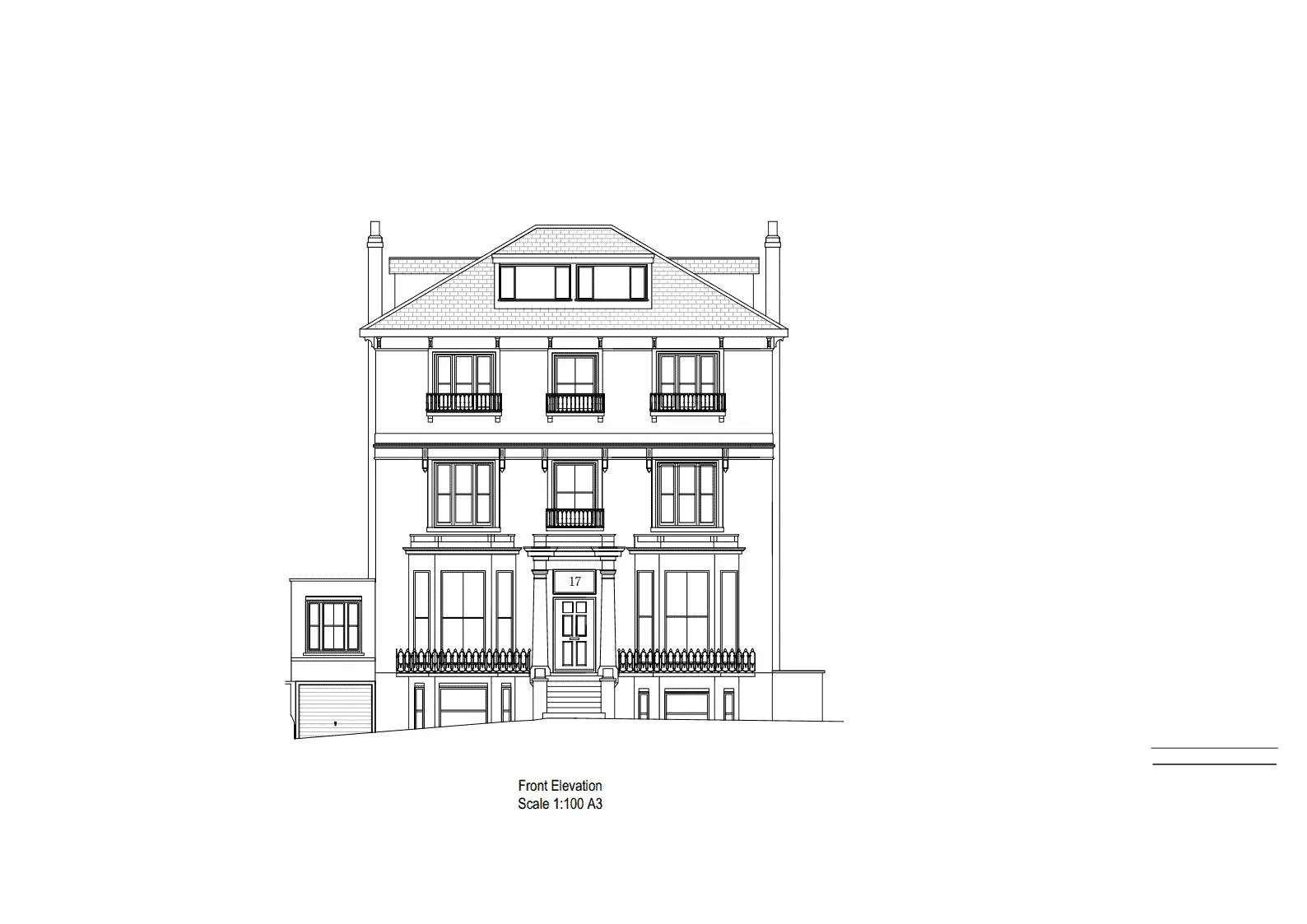
An elevation drawing is a view showing one side of a building. It’s the most common method to show the outside of a building and is useful as it can clearly show what an existing or proposed situation looks like.
An elevation drawing can pick up basic information such as the location of doors, windows and steps, as well as more complex features of the building’s façade, such as architectural details above windows and ironmongery.
Depending on the building work taking place, an elevation will be required on the building faces that are being changed. For example, a rear extension may require both a rear elevation and a side elevation drawing.
A measured survey elevation will typically show wall openings with their positions and dimensions, door and window types and proportions, roof lines, chimneys, rainwater goods, and any significant architectural features or mouldings on the facade. For planning applications, external elevations are nearly always required on any face of the building where alterations are proposed.
See example elevation drawings
Site / Topographical Plan Examples
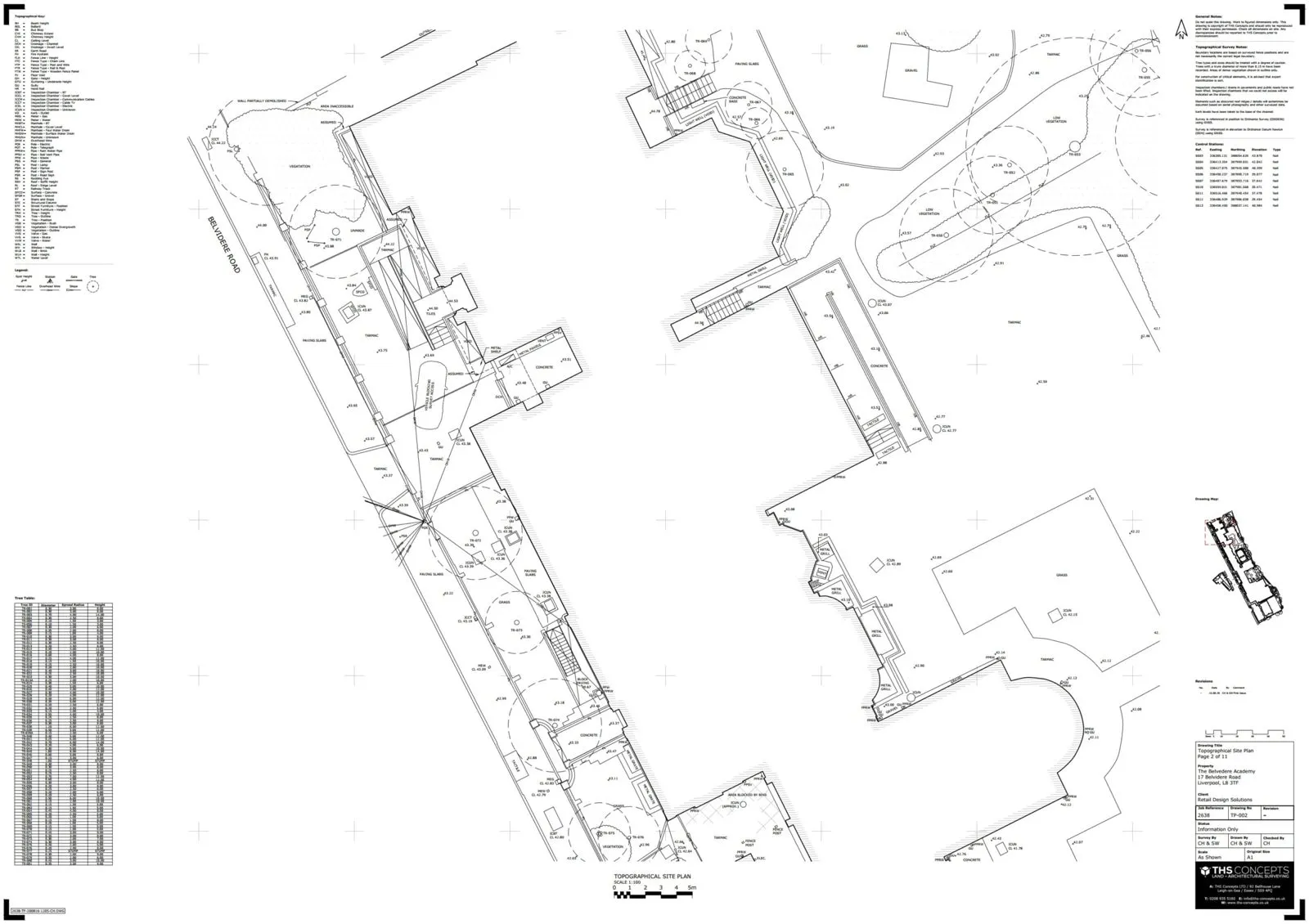
A site plan can be defined as a slightly simplified topographical survey. This will show your building in relation to important features such as property boundaries, other buildings on site, large trees etc.
A site plan may also show where inspection chambers are and note their details, including invert levels and drain run directions. Sometimes it is crucial to know where your proposed development sits in regard to other features, so issues like planning permission are nullified.
A site plan produced from survey data will typically show the building outline in relation to boundary features, neighbouring structures, access points, significant trees, and hard and soft landscaping. Where levels are required, spot heights or contours can be added. This type of plan is commonly needed for planning submissions where the development affects the site beyond the building envelope itself.
Roof Plan
A roof plan shows the building from directly above, with the roof in place. It captures ridge and valley lines, roof pitches, parapet walls, chimney stacks, rooflights and drainage outlets. Roof plans are commonly requested alongside floor plans and elevations for planning applications involving loft conversions, extensions that alter the roofline, or any work affecting the roof structure.
Ceiling Plans / Reflected Ceiling Plans
A reflected ceiling plan (RCP) shows the ceiling as if it were reflected downward onto the floor plan, so the position of beams, ceiling heights, light fittings, smoke detectors, HVAC grilles and any bulkheads or soffits are all clearly shown in relation to the room layout below. These are particularly useful for interior design, fit-out projects and refurbishments where ceiling treatments and services coordination are important.
Point Cloud and 3D Outputs
Where a building is captured using 3D laser scanning, the raw output is a point cloud: a dense set of measured data points representing every surface in the building. Point cloud files can be delivered alongside 2D drawings and allow architects, engineers and designers to interrogate the building data directly. For projects requiring BIM workflows, point cloud data can also be used to produce a 3D Revit model. These outputs are covered in more detail on our measured survey service page.
Which drawings do I need for my project?
The right combination depends on what you are doing and what your architect or local authority requires. As a general guide:
For a house extension or loft conversion planning application, you will typically need floor plans of all affected levels, external elevations of any faces being altered, and a site plan. A section is often required as well, particularly for loft conversions where the roof structure relationship is important.
For a full refurbishment or building regulations submission, a more complete drawing package is usually needed, including all floor plans, full elevations, sections, and in some cases ceiling plans and internal elevations for the rooms being altered.
For commercial fit-outs and office refurbishments, floor plans and reflected ceiling plans are the most commonly requested combination, with sections and elevations added depending on the scope.
For heritage and listed building work, a detailed survey covering all elevations, sections and any significant architectural features is usually required. Laser scanning is often the most appropriate method for these buildings.
If you are unsure which drawings your project needs, the easiest approach is to share the address and a brief description of the works with us and we can advise on a suitable scope.
FAQ - Measured Survey Drawings
Seen enough to know what you need?
Send us the property address, the drawings required and any timescales, and we will confirm the survey scope and issue a quotation.